Sustainable Music

Translate

Showing posts with label American Folklore Society. Show all posts

Sunday, November 28, 2021

Doing DERT at the American Folklore Society Conference


Apple orchard atop Tanner's Ridge, Page Co., VA. Photo by Jeff Todd Titon, 1979.

     Despite COVID-19 academic conferences haven’t let up. Instead, they’ve either gone entirely online or become hybrid, partially online and partially in-person. The American Folklore Society annual conference was hybrid, spanning the week of Oct. 18-25, in person in Harrisburg, Pennsylvania and online from wherever the participants happened to be at the time. I was in Maine, part of a roundtable forum with others who were in Indiana, Maryland, and Ohio. John McDowell, folklorist from Indiana University’s Folklore Institute, put it together to showcase publication of a recent book, Performing Environmentalisms: Expressive Culture and Ecological Change, published earlier this year by Indiana University Press. The book grew out of a conference at Indiana University in the spring of 2017, sponsored by Indiana’s DERT group, the Diverse Environmentalist Research Team, based in the university’s folklore and ethnomusicology department. Although invited, I was unable to participate in the conference because I was scheduled for arthroscopic knee surgery at the same time. Later I was invited to contribute an essay to the book anyway, and to that end I decided to revisit a colloquium talk that I presented to the folklore department at the University of Pennsylvania, in 1984, which I entitled “Toward an Ecological Paradigm for Folklife Studies,” and again in a condensed version before the American Folklore Society, in 1986. I never tried to publish it; rather, I relied on some of it for a chapter of my book, Powerhouse for God (2018 [1988]), which focused on the folklife of mountain farming in the northern Blue Ridge Mountains from 1850 until the coming of the Shenandoah National Park to the area. The families living on what would become Park land were displaced—that is, kicked out—by the federal government which exercised eminent domain and attempted to resettle the families elsewhere, an experiment that, like others in Appalachia, failed. Nonetheless, the story of the families who lived there, I found, by looking at the household-by-household agricultural census, as well as courthouse records, wills, probate inventories, genealogies, trial transcripts, and local histories, was different from the prevailing narrative of these Appalachian mountaineers as a backward and impoverished population in a “land that time forgot.” In fact, the evidence revealed that these farming families were succeeding in the nineteenth century until around 1900 when a series of disturbances to their mountain agricultural ecosystem reduced them to the poverty in which they were found by government agents and journalists in the 1920s as plans for the Park were developing. Those disturbances included a blight that killed the chestnut trees, robbing the mountain families’ pigs of an important, and cost-free, food source, namely chestnut mast. Overpopulation was another problem, along with the coming of the railroad which enabled corporations from outside the region to buy timber rights and undertake large-scale timber harvesting. This left the land far more vulnerable to flooding and made farming far more difficult. In contemporary ecological terminology we would say that the ecosystem regime had achieved a degree of stability in the second half of the nineteenth century but that this series of disturbances took it to a tipping point in which the regime changed to a different and far less desirable ecosystem, one in which it was no longer possible for mountain families to make a living from farming in this area.
    For the colloquium, the AFS paper, and the book, I was content to leave the story there, trying to underline the point that the Appalachian hillbilly stereotype was contradicted by the evidence; and that rather than settling into poverty this population was reduced to it. But for the DERT essay, after encouragement from John McDowell, I decided to add a section in which I presented and interpreted several performed narratives, spoken by the last generation of mountain farmers, about what it was like to try to make a living after the regime change. And in the DERT presentation for the AFS forum last October, I revisited my ecological approach to folklife in light of these additional narratives, and then related it to what we now think of as traditional ecological knowledge (TEK), in this case the knowledge that enabled the mountain farming ecosystem to flourish and provide a living for families who lived there in the nineteenth century. But this ecosystem was unsustainable in the face of the pressures of modernization and development, and vulnerable to environmental disasters such as the chestnut blight.
    I also spoke, at the end of this presentation, about an issue that has concerned me now for many years; namely, the roles of TEK and IEK (Indigenous ecological knowledges) in the discourses surrounding environmental as well as musical and cultural sustainability. But I will leave that for a later blog entry.

Saturday, July 31, 2021

Environmental Sustainability, Personhood, Legal Rights, and Indigenous Ecological Knowledges

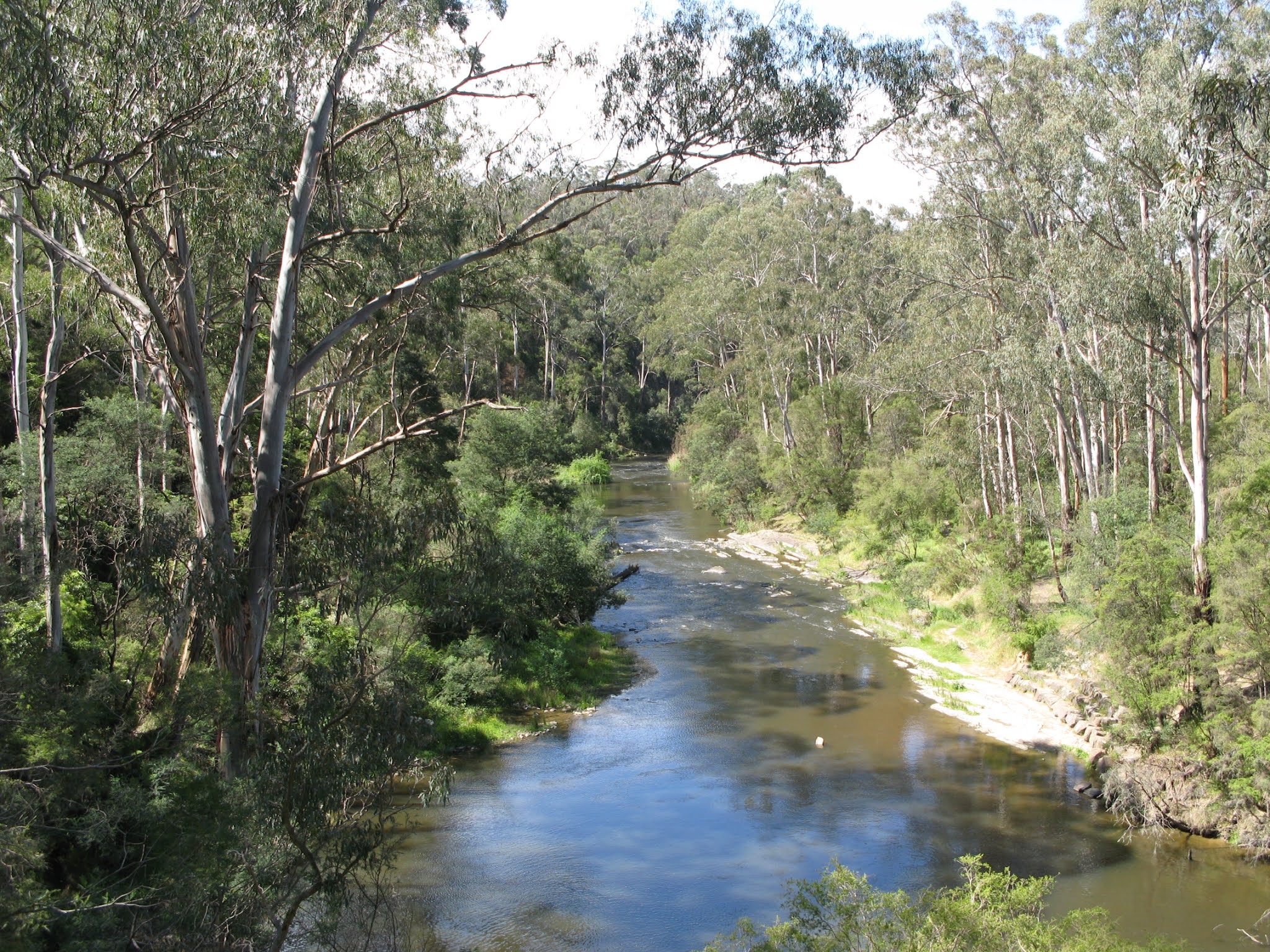
Upper Yarra River, Australia. Courtesy Wikimedia Commons.


      In the Yoder Lecture, which I delivered on October 15, 2017 to the American Folklore Society as "Ecojustice, Folklife and a Sound Ecology," I said that “In extending the idea of ecojustice to the Earth and all its beings, the ecojustice movement would in my view do well to consider these beings—including plants, nonhuman animals, landforms, and so forth—as persons, with the justice and rights that persons deserve. Needless to say, this is not how we in the modern, Euro-American world usually think of justice. We extend only limited rights to beings outside the human world, as for example in our laws against excessive cruelty to the higher animals.” After the lecture, one of the two discussants pointed out that there was, also, a downside in considering these beings persons; namely, that in bringing them into the legal system it would also risk subjecting them to adverse judgments, to obligations that accompany rights, and to other encumbrances of the law, which seemed unwise. I’d spoken about traditional and Indigenous ecological knowledges of nature in that lecture, but did not have the time to speak a rejoinder and say that for many Indigenous peoples, nonhuman beings are like persons, in some ways are kin, and do have standing. In the meantime, I’ve thought more about this issue, but only recently learned that it has been pursued in the courts and legislature in Australia, in response to Aboriginal peoples’ activism. Indeed, it was in 2017 that the Yarra River Protection Act was passed in Parliament, which recognizes the river as a living entity. The Yarra River runs some 150 miles through the Yarra Valley and into Melbourne before flowing into Hobson’s Bay. For the Australian settlers, this recognition fits within the scientific portrait of the river as an integrated ecosystem. But for the aboriginal Wurundjeri the river means something more than that, which also is carried in the concept of personhood: the river with its fish, and its birds, and its land corridor, is a relative, their kin, a sacred, life-giving ancestor. Personhood, in this sense, carries with it a good deal more than mere legal standing and the right to protection.  

Wednesday, October 31, 2018

Environmental Toxicity, Narrative Ecology, Perspectivism and a Sound Ecology: The 2018 AFS Conference


The annual conference of the American Folklore Society took place in Buffalo, New York last week. It is always good to connect and re-connect with folklorist friends and colleagues in person, especially now that I’ve fully retired and don’t see the students and my friends and colleagues at Brown on a daily basis anymore. Of course I connect via email, but the internet doesn’t provide anywhere near the same feeling of presence that in-person does. For folklorists this is felt especially strongly because one of the best definitions of folklore was Dan Ben-Amos’ in the 1970s as “artistic communication in small groups” that were present face-to-face. Besides, presence by means of sound plays a very important role in my developing theory of a sound ecology. 

I went to a number of presentations, especially those where folklore is shading over now into the environmental humanities, and activists are increasingly concerned with ecojustice. I was present at the founding meeting of the folklore and science section, a group of folklorists interested in the interface between the two areas. And I presented on a panel called “Sensate Worlds,” in which four of us in turn summarized our research in areas related to folklore and sense perception. 

Several panels were devoted to folklore, oral history and environmental toxicity. They took up the question I addressed in my Yoder Lecture last year; namely, how can folklorists, whose skills in interpreting life stories of so-called ordinary citizens have been well developed, contribute to society’s recognition and amelioration of the environmental damage that unfairly targets rural areas and disadvantaged populations? The flood waters from Hurricane Florence only weeks ago released many tons of toxic metals, including mercury, in the coal mining waste into the Cape Fear River. It’s been an open secret that the mining corporations that blast off the tops of mountains and the electric utilities that burn coal store this waste in vulnerable sites. The Obama Administration strengthened regulations of coal waste storage, but under the current Administration the EPA has relaxed these (and other) regulations, and the resulting harm was far worse than it otherwise might have been. One panelist addressed the environmental and human health impacts of fracking in eastern Ohio, through interviews with farmers whose land and water was poisoned. Stories like this have been in the news, but folklorist activists have long-term listening and policy-influencing skills in the public arena that journalists who report on fracking and other environmental impacts do not. It’s heartening to see folklorists move back, after decades of work inside academia adding to the storehouse of knowledge, and decades of work in the public sector celebrating the diversity of community folk arts, into the activism that characterized folklore in the US during the Great Depression of the 1930s. This activism fell victim to the mobilization for World War II and the fear of Nazism and Communism after the War, accompanied by a nativist turn, the HUAC hearings, and a retreat among folklorists to the safety of the ivory tower. Today’s nativism, however, is resulting in the feeling that this is not normal, and among folklorists as others who celebrate cultural diversity, it is a time to resist. 

The “Sensate Worlds” panel brought me together with Danille Patterson (who organized it as part of her folklore and science initiative), Mary Hufford, and John McDowell. All of us had participated in the groundbreaking folklore and environmental humanities panels that ran throughout an entire day at the meetings two years ago; and John was one of the organizers of the DERT (Diverse Environmental Research Team) group of folklorists, anthropologists, ethnomusicologists and ecomusicologists who got together in the spring of 2016 (I could not attend on account of knee surgery) and who will be bringing out a book edited by John and the other founders sometime next year, we hope. Mary has been pursuing several research projects simultaneously; she presented here on her “narrative ecology” project, linking it with the senses, phenomenology, and Merleau-Ponty’s “flesh of sensibility” theory. Like me, Mary is especially interested in the natural environment; and for more than 25 years she has been studying the ways people tell stores about environmental history and change as it impacts various named places, particularly in Appalachian West Virginia, with a time depth going back to pre-European contact. John’s presentation was both an acknowledgment and critique of de Castro’s perspectivism, a theory of New World native Americans’ ideas about the relations of humans with plants and animals that is far more sophisticated than anthropological theories of animism. As we increasingly recognize that we are in a post-human era, with a relation to the environment that can no longer be exploitative, indigenous perspectivism offers a possible pathway to a new and healthier relationship to nature. Is the Western world ready to learn from our Native brothers and sisters at last? Danille spoke about how the use of the senses (especially smell, and of course taste) was an integral part of cooking as revealed by cookbooks prior to the scientific revolution wtih recipes ushered in by Fannie Farmer’s Boston Cooking School, where precise measurements and ingredients and directions largely supplanted the uses of the senses along with less precise indications of the amount of ingredients along with more general directions. This scientific revolution in cooking occurred in the late 1800s, and I believe it ushered in a trend that peaked in the mid-20th century with its gleamingly modern, clean kitchens and grade-school classes in home economics. My own presentation represented a small portion of my sound ecology project and asked whether a phenomenological approach to animal sound communication would yield information and insights. I described recent research in the field of ecological psychology, specifically the so-called phenomenological proposal theorizing direct social perception and direct perception empathy, and in the area of mirror neurons that, combined with a phenomenology of umwelt and affordances offered a way of thinking about the expressive culture of nonhuman animals in their own terms.

In one way or another, all four of us were working at the interfaces of folklore and science. It might not seem as if John’s work with perspectivism did so, but consider that indigenous ecological knowledge does what Western science does in offering an explanation of nature and a means of prediction and, to some extent, control. The inaugural meeting of the folklore and science section revealed quite a variety of interests, matching the four of ours and extending them in various directions. It will be exciting to see how this develops. 

I would be remiss if I didn’t close by mentioning a supper and reunion that I had with some of the graduates of Brown’s doctoral program in ethnomusicology: Cliff Murphy, now head of the Folk Arts Division of the National Endowment for the Arts; Bradley Hanson, now the Tennessee state folklorist; and Maureen Loughran, deputy director of the Center for Traditional Music and Dance, in Manhattan, New York. We spoke about old times at Brown, and about new concerns. Each of them has their PhD in ethnomusicology and each is working in the field of public folklore, where ethnomusicologists have contributed mightily since, well, the 1970s as far as I know. It was in 1976 when I had been teaching ethnomusicology for only two years (and folklore for five) that I worked as a public folklorist for the Smithsonian Festival of American Folklife, in Washington, DC, in its bicentennial gala year when the Festival ran all summer long, with seven different performance stages and seven more interpretive stages showcasing and celebrating the expressive cultural diversity of the traditional folk arts in the United States along with their counterparts in other nations.  
Big Joe Williams and friend at 1976 Smithsonian FAF.
Photograph by Jeff Todd Titon
So, for example, there were music performances and crafts demonstrations from the Franco-American and Cajun communities side by side with the same from Quebec and from France. The synergy was something to behold. I couldn’t have had a finer introduction to the joys and problems of public folklore. In the next two decades I served as a consultant and panelist and site visitor for the Folk Arts Division of the National Endowment for the Arts, and when I began directing the PhD program in ethnomusicology at Brown, I could not—and didn’t want to—avoid introducing students to public folklore as well as to applied ethnomusicology along with their education in the more standard academic subjects of fieldwork, ethnography and musical analysis. It’s gratifying to know that some of our graduates—these three are by no means all—have found satisfying careers as ethnomusicologists working in the field of public folklore, while others have found more traditional careers as college and university professors.


Friday, January 20, 2017

Alan Jabbour (1942-2017), Sustainability Champion

    Alan Jabbour, who died on Friday the 13th of this month, was a leader in the cultural sustainability movement before the term sustainability came into fashion. Based in Washington, DC, from 1969-1999 he led three important federal organizations involved with musical and cultural conservation. In addition to his main work as an organization leader and administrator, he was a musician and a scholar. Besides, he was a loyal colleague to hundreds of public folklorists, and dozens of ethnomusicologists, who were active from the 1960s until now.
     As a graduate student in the 1960s at Duke, Jabbour was exposed to traditional fiddle music and eventually met Henry Reed, an octagenarian fiddler from Virginia whose music represented a 19th-century upland South fiddle repertory and style of playing. For Jabbour, who had been trained as a classical violinist from childhood, Reed became a mentor and his music a revelation, a window on an elegant era prior to commercial recordings, an era when amateur musicians played in their family circles and supplied music for community gatherings. Jabbour’s field recordings of Henry Reed’s fiddling may be enjoyed at https://www.loc.gov/collections/henry-reed-fiddle-tunes/about-this-collection/.
    After a brief period as an English professor at UCLA, Jabbour left to work in Washington as head of the Archive of American Folk Song at the Library of Congress (1969-74). In 1974 he moved to the National Endowment for the Arts, leading their newly formed Folk-Jazz-Ethnic division. In 1976, he returned to the Library of Congress to direct the newly-formed American Folklife Center (AFC), now incorporating the Archive of Folk Song. In these positions, he initiated, coordinated, and administered various projects to conserve traditional cultures, their music and folklore. Notably, the AFC undertook field documentation surveys of folklore in various regions of the US, from the late 1970s through the end of the 20th century. These constitute an important snapshot of folklife in the last 25 years of the last century. These were professionally done, by folklife specialists trained in interviewing, recording, photographing, and so on. They are appropriately preserved in the AFC’s archives, while some of the highlights are available today on the AFC website. Decades hence, I believe, they will be recognized as a contribution as important as the FSA photographs and other cultural documentation undertaken at the Roosevelt Administration’s initiative during the late 1930s.
     None of this would have happened without Alan’s skillful leadership from the AFC, where the decisions were made concerning which regions of the US would benefit from surveys, where the negotiations were undertaken with the Congressional representatives from those regions, and with the local community leaders; where the teams of folklorists were assembled and instructed—always accompanied by some of the folklife specialists from the AFC—and where the materials collected were taken, inventoried, where the exhibits were designed, and where all the documentation eventually was housed. The results of these were exhibited in their regions and are housed permanently in the Archives of Folk Culture at the AFC, which incorporates the older Archive of American Folksong.
    Under Jabbour’s direction, the Center also sponsored conferences, where practitioners at the cutting edge of cultural conservation gathered to exchange ideas and information. At the same time, the Archive of Folk Song grew to become by far the leading repository of field-recorded traditional music from regional and ethnic groups throughout the US, at the same time encouraging the publication of the best of this music. Much of their work was documented in the Center’s Newsletter, which is now available on line.  As an administrator, he did not have as much time to work on his own projects that he would have, had he continued as a professor at UCLA. But he directed an organization that left an unparalleled cultural sustainability legacy, and many young folklorists who worked on AFC projects acknowledge their debt to Jabbour and the permanent staff of folklife spcialists who worked for him at the Library of Congress. He retired in 1999 for the next seventeen years pursued a career both as an independent folklorist and consultant, and also as a fiddler, appearing in concerts and teaching workshops at old-time music camps, always championing the music of his mentor, Henry Reed.
    In person, Alan—I will call him Alan from now on, because we knew each other—was a very tall, gentle man with a noticeably deep, echoing bass voice, a southern drawl acquired in his native Florida, and a courtly manner. He directed with a light hand, understanding that people did their best work when they could add their own ideas to the mix. He was very supportive of those whose work he admired, and quick to appreciate it. He bent over backwards to help those in need—so much so that when he stood up, he even appeared to be bending backwards.

Alan Jabbour with Gene Reed at Henry Reed's grave
    My own relationship with the American Folklife Center goes back to the 1960s, when I began depositing my field recordings of blues and African American preaching in the Archive of American Folksong. After the Archive became something more encompassing, a Center that initiated projects rather than chiefly acting as a repository for recordings and related material, I borrowed field equipment from them to make high quality recordings, contributed essays to several of their publications, worked as a consultant with Alan and some of the other folklife specialists on various projects, and continued to deposit field recordings. Most of my original field recordings are now in their archives, except for those I made in Kentucky. My Kentucky recordings are in the Sound Archives in the Special Collections of the Hutchins Library, at Berea College, in Berea, Kentucky.  
     Alan and I met, also, as fellow old-time string band musicians. I’ve written here, before, about Breakin’ Up Winter and the special musical community surrounding the old-time string band revival; and I’ve written elsewhere about the special bond that can occur among musicians who, on account of achieving musical rapport, feel as if they’ve come to know one another more deeply than otherwise. We also became interested in each other’s scholarship on the subject—something that was an old interest of Alan’s and that gradually became an interest of my own. One of Alan's most important observations was that the main reason for the differences between the fiddle styles of Yankee New England and the upland South were the syncopated rhythms that the southern fiddlers had incorporated into their bowing technique, specifically the way they placed a strong accent on the back-beat, or offbeat, or upbeat, as it is variously called. African American fiddlers had originated it, he thought, and by the Civil War white fiddlers were also doing it.
    After Alan retired, I saw him less often, but he still came to American Folklore Society (AFS) conferences, and I can recall playing with him at the jam session when AFS was in Quebec City, and again at Breakin’ Up Winter only a couple of years ago. He also had begun to speak about the early phase of the old-time string band revival, in which he’d played such an important role, from the perspective of his own experiences with Reed and with the Hollow Rock String Band.
    I’m sure Alan left several unfinished scholarly projects at his death, as well as recordings that he made with his musical partner, Ken Perlman, and others. There may even be recordings of his fiddling along with the incomparable banjo of Blanton Owen, a feature of the AFS conferences in the 1970s. Probably he wouldn’t have wanted some of these to appear in the form he left them, but others—for example, papers that he presented publicly—will, I hope, be gathered in a collection and published by a university press or, perhaps, by the AFC that he loved and served so well for nearly 25 years.

Saturday, October 24, 2015

Labor Dispute at the AFS Conference 2015

    I’m just back from the annual conference of the American Folklore Society (AFS), that took place this year in Long Beach, California. Every year the Society books the conference in a mid-sized city with more or less affordable accommodations in a hotel with conference rooms or a nearby conference center large enough to hold nearly a thousand people. An unusual aspect of this year’s conference was that our hotel workers were involved in a labor dispute with management. As a result, some of our members stayed away from the hotel, and others from the conference altogether. I might have done so too, but last year I was elected a member of our Executive Board, and so in addition to my rank-and-file membership I am now responsible as a trustee of the Society as a whole.
    When our AFS Board met last spring, our Executive Director presented us with the news of the labor dispute and asked us to consider whether we wanted the Society to pull out of the conference. There was no strike because the dispute was not between a union and management; rather, the dispute was over the method by which workers would vote to decide whether to be represented by a union. Most, if not all of us, were sympathetic with labor in this dispute; however, we were told that if AFS withdrew from this hotel, our Society would face several problems. First, we would be unable to book another suitable hotel at this time within the Los Angeles area; second, breaking our legal contract with the hotel would cost the Society a penalty of $100,000, which would amount to more than the Society’s annual income from member dues and deal a significant blow to our sustainability. The Executive Director recommended that we continue with plans to hold the conference at that hotel, but try to intervene to help settle the dispute, and also hold activities in connection with the conference that might educate the participants, as well as our members, in labor history and expressive culture. This recommendation carried, with only one vote against. I decided that my responsibilities as a Board member to the Society in this case outweighed my qualms and joined in the affirmative vote.
    As I anticipated, the union and management ignored our efforts to mediate, while the union attempted to enlist support from our membership. Some events were held outside the hotel, and a delegation from our Society went to meet with the chief officer of the hotel to present their views on behalf of the workers. In gratitude, the union called off its daily, hour-long and quite vocal protests outside the hotel, which could have interfered with our conference presentations. Yet, predictably, no progress was made in the labor dispute.
    In a later post I will say some things about the conference itself. One of its themes was “ecologies,” and some of the presentations on that theme interested me. I presented on a panel concerned with “sensory ecologies” — the ecological systems involving expressive culture and the senses—and offered a much-abbreviated version of the keynote on a sound ecology that I presented at both the Canadian Society for Traditional Music last June, and the joint SEM-ICTM forum in Ireland last month.

Tuesday, February 10, 2015

Sound research over the years

    In early November, right after a horrific snowstorm that knocked out the electricity for five days, and snapped off or toppled over many white spruce trees in the nearby forest, I flew from Maine to Santa Fe for the annual conference of the American Folklore Society. I hadn't planned to give a paper this year, but I was asked to be on a panel called "Leaders in the Field," where a number of us older hands would be interviewed for posterity. The session was going to be videotaped and go into the Society’s archives. The irony struck that, having spent so much of my professional life documenting others, now I was to be a subject. Well, fair’s fair. Besides, professors are willing to talk about and share their research. To think and talk about its trajectory over the past forty years was an invitation I couldn't pass up, and didn't. So when it was my turn I told some stories about my interests in music and sound over the years and where that’s led. Here are a few of them.
    I was asked how I first got interested in music, and replied with a story my mother told me. She said that my first words were sung, not spoken. Evidently my family were avid radio listeners, and what caught my ear came out in song (phonetically) as “Pepi coda hitta pot.” The melody, not the mispronounced words, made it clear to my mother that what I was singing was a Pepsi jingle (“Pepsi-Cola hits the spot”). I sang before I spoke.
    I’ve told the story many times about the conversation my American studies program adviser had with me after I told her that I was going to write my dissertation on blues. “Has any scholar written on ‘that music’ before?,” she asked. “Not to my knowledge,” I replied. I didn’t know of any doctoral dissertations on blues, or any that analyzed the music. Books on blues were mainly artist biographies, written by fans, although some  researchers like Paul Oliver had written well about themes in the lyrics and other subjects. (I was unaware at that time that Bill Ferris was then writing a dissertation on blues at Penn; I got to know him later when he taught at Yale.) I thought my program adviser was asking whether I’d be making an original contribution to knowledge by writing on this subject. “Have you thought seriously about the consequences of your decision?” Consequences? I thought that the consequences of making an original contribution, if it were any good, would be satisfaction for the author and the reward of the doctoral degree. “Yes, sure,” I said, somewhat mystified by this question. And that was the end of the discussion.
    A few years later, when people began to ask me what I was doing teaching in an English department with a degree in American studies and a dissertation on blues, I would reply that in addition to writing about the music I was making a case for blues as African American cultural expression that resulted in worthy literature in and of itself. One didn’t have to go to the writings of Langston Hughes or Sterling Brown to find good blues poems; they were right there in the blues songs themselves, recorded from the 1920s onward.
    But gradually it dawned on me that the reason they were asking, and the reason why my program adviser had questioned me about my choice of dissertation topic, was that my path already was quite unusual. My adviser was worried for the future of my academic career and was asking if I’d realized that the likely consequence of choosing to write about ‘that music’ was academic suicide—i.e., whoever was going to hire this misfit? Luckily, I was too naive to think that research wouldn’t be rewarded on merit rather than choice of subject and, luckily, I was hired in a tenure-track job at a good university when such jobs were a lot more plentiful than they are today. As a graduate student I didn't think very much about careers; I just assumed it would take care of itself if I did well enough as a teacher and scholar.
    Fifteen years later, merit didn’t triumph over subject choice. Three of us were trying to raise money to make the Powerhouse for God documentary film about a powerful preacher-singer and his family in Appalachia’s northern Blue Ridge. Although we were successful with the National Endowment for the Arts, the National Endowment for the Humanities turned us down three times. After our third grant proposal was unsuccessful, we found ourselves in DC—we’d started shooting the film, and we needed to get some equipment repaired—and while cooling our heels we got an appointment to meet with the NEH program officer. She told us she was very sorry we’d been denied funding so often, because it was obvious that we were fine film makers and that the scholarship behind the film was thorough. The problem, she said, was our subject. Appalachia was too obscure, and religious subjects could be controversial. “Couldn’t you make a film about the life of Lincoln? I’m sure you could get funding for that,” she wound up. We walked out without saying another word.
    One more story. I’ve often been asked how I got interested in doing research on the musical sermons of Rev. C. L. Franklin. Most people think I came to it through listening to his daughter Aretha, and learning about her background. Franklin was the most highly regarded black Baptist preacher of his generation; as the head of the National Baptist Association observed, he had a “whoop that comes along once in a hundred years.” (Whooping is what black preachers—and others—call the traditional musical delivery, where the preacher comes to a climax, improvising the words and singing them to a melody that carries them.)  But that wasn’t how I learned about Rev. Franklin.
    Instead, it happened when I was a graduate student, and when in addition to my studies and teaching duties I was playing guitar in Lazy Bill Lucas’s blues band. One Saturday night we got back early in the morning around 2 a.m. from a gig and I crashed on Bill’s couch. The next day he shook me awake at 7 a.m. and said, “Come on, boy. we’re going to church!” I hadn’t known Bill played piano at a nearby church—St. Mark's Baptist Church—but he was there most Sunday mornings accompanying the gospel songs, and he thought it’d do me some good to hear another kind of music. I stumbled off the couch and we got to the church, and I did enjoy the songs. Of course, I’d heard black gospel music for years, but what I hadn’t heard was whooped preaching. Rev. George Trawick was the preacher, and I was transfixed by this sound that was new to me. Later, I asked Bill about it, and he said I ought to listen to Rev. Franklin’s sermons. He just happened to have some albums that were recorded in New Bethel, in Detroit, Rev. Franklin’s church. They were very popular, he said. Indeed, Rev. Franklin was a rock star among African Americans of his generation, though completely unknown outside of the black communities. As soon as I heard Bill's records of Rev. Franklin's sermons, I knew I had heard a rare and gifted orator and poet-preacher with a remarkable musical delivery in his sermons that were improvised at the moment of performance, without a printed manuscript.
    And that was the start of my research on Rev. Franklin and the sound of the whoop. It was around 1969 that I heard Rev. Trawick. I already was working on my dissertation on blues, and I realized that I should complete that project before going on in earnest with this new one. So I did, and then in 1976 I met Rev. Franklin for the first time. I phoned him up, told him I wanted to visit, and asked him to suggest a weekend. He hemmed and hawed—I thought it was because this was an unusual request (coming from a professor of literature, at that)—and finally he offered a date, saying that on that weekend his daughter Aretha would be there. I said that would be fine, “but it’s you I want to see.” “Oh well then,” he told me, “come anytime!” I wonder what my American studies program adviser would have said about that research topic.
    Researching blues turned out not to be the lonely pursuit my adviser thought it would be. In addition to Bill Ferris at Penn, David Evans was researching blues at UCLA, and later several other scholars took up the subject, notably Houston Baker and Henry Louis (“Skip”) Gates, Jr. Angela Davis, known to me as a radical feminist and advocate of black power in the 1960s, later wrote a superb book about the vaudeville blues singers of the 1920s, Ma Rainey and Bessie Smith and others. But black preaching remained an obscure research area—and to some extent it still is, although that may be changing. In the 1970s I did visit with Rev. Franklin, and over the course of several months interviewed him more than a dozen times about his life and preaching, and videotaped seven of his sermons. In the 1980s I wrote an essay on him in a book published by the Library of Congress, and wrote a book about his life and sermons that was published by the University of Illinois Press. The book did not interest my fellow folklorists and ethnomusicologists very much, nor were my colleagues in American studies much more than curious. It did sell, slowly but steadily, to scholars in African American religious studies.
    I’ve mentioned Rev. Franklin in this blog a few times before. For years I’ve been wanting to figure out a good way to publish the videotapes that I recorded of his preaching, so that they would reach what I came to realize was their target audience: the scholars of black preaching, the African American theologians, and the preachers themselves who wanted to see as well as hear this man whose whoop came along once in a hundred years. It wasn’t until the summer before last that, after I'd been looking for the target audience for many years, the target audience found me instead, and asked me to give a keynote at the first conference to celebrate the legacy of Rev. Franklin. Held in Detroit last April, “The Voice of a Prophet” (2014) attracted about 500 scholars and preachers and theologians and lay people. I showed the last two-thirds of one of my videos shot of Rev. Franklin in Detroit in the 1970s, and soon half the room was standing, cell phones in hand, copying the grainy, black-and-white video that was projected on the screen. (Some of that is on YouTube now.) There’s to be another conference this coming April, and I will show another video. I’m sure it won’t be too long before arrangements are made to publish these videotapes in a form that will enable them to take their place in this community after all these years of sequestration, or curation, or whatever one calls it.
    And so those are just some of the stories I told at the folklore conference. Elders are expected to have them, and I do. But I wouldn’t want them to upstage the research itself on blues or the sound of black preaching. When asked what theme I thought had unified my research over the years, I didn’t hesitate: it was sound, I said, whether the timbre of blues, or the elaborate songs of Old Regular Baptists, or the whoop of the black preacher, or its white preaching sound counterpart (that can be heard in John Sherfey’s chanted sermons, from my Powerhouse for God project, or the even more musical chant of Old Regular Baptist preachers). I concluded by saying that my appeal for a sound commons for all creatures, and current studies of animal sound communication, are a continuation of this lifelong pursuit of sound. 

Friday, March 14, 2014

Applied vs. Academic Ethnomusicology: A Persistent Error

    Why do people continue to believe, mistakenly and with harmful consequences, that applied ethnomusicology stands in oppostion to academic ethnomusicology? I wrote about this in passing, in a 2011 blog entry. Here, as I prepare my part of the Introduction to the forthcoming Oxford Handbook of Applied Ethnomusicology, which I'm co-editing with Svanibor Pettan, I return to explain the reasons. The mistake arises out of a confusion of what applied ethnomusicology is, with where the person doing it is employed. Think of a grid with two fields and two categories. The fields are places of employment: either (1) inside colleges and universities, or (2) outside them. The categories: (1) ethnomusicological reseach and scholarship, and (2) ethnomusicological research and scholarship put to practical use--i.e., applied ethnomusicology. None of these is mutually exclusive. Ethnomusicologists do scholarly research whether employed in the academic world or not. Ethnomusicologists do applied work whether employed inside the academy or outside of it. In fact, considered as a worldwide phenomenon, more academics than non-academics are engaged in applied ethnomusicology.  
    One recent example of the persistence of this false dichotomy: At the 2013 conference of the Society for Ethnomusicology (SEM), a meeting of “program heads” was convened for the first time, bringing together representative directors of university doctoral programs, faculty from colleges offering only undergraduate degrees, and heads of institutions doing applied ethnomusicology in the public interest, such as Smithsonian Folkways Records, and the Rock and Roll Hall of Fame and Museum. For those who may not be aware of their work in this area, Smithsonian Folkways promotes the music of traditional musicians in minority groups and cultures, while the Rock and Roll museum has a large educational music outreach program. The convener of this event asked me (as a co-chair of the Applied Ethnomusicology Section of SEM) to suggest names of people who would represent “public sector ethnomusicology”—that is, ethnomusicology practiced by those employed by taxpayer dollars in government-funded institutions at the federal and state level. Not only did such a charge overlook the NGOs doing applied ethnomusicology, but it was based on the same mistaken bifurcation of academic vs. applied, while locating applied ethnomusicology as something done outside of the academic world, in the public sector. And at the program heads meeting, I noted that most of the "heads" unthinkingly adopted the same bifurcated view.
    As an aside, the term “public sector ethnomusicology” hearkens back to the 1980s when public folklore was called “public sector folklore.” This was a misnomer then, as it is now; and it arose out of the same mistaken dichotomy between academic and public in the folklore world, which dichotomy was valiantly opposed by the then-president of the American Folklore Society (AFS), Barbara Kirshenblatt-Gimblett, in her 1988 address to the AFS, later published in the Society’s Journal. Must ethnomusicology repeat folklore’s agonies 25 years later?
    Why, then, does this division persist in the minds of ethnomusicologists? I don't think it's only a matter of confusion, and that once the facts are on the table, the error will disappear. The reasons for it are deeper, and the explanation is cultural--in the cultures of our own institutions. Unless those cultures change, the division will persist. One way to pursue it is to ask why so many ethnomusicologists employed outside the academic world are content to equate applied with non-academic. In the early 2000s, on the initiative of its Applied Ethnomusicology Section, SEM regularly sponsored panels on alternative careers where practitioners employed outside academia spoke of how they did applied ethnomusicology in their work. Among these were public folklorists specializing in music. The Section also invited people from the corporate and government worlds to speak to SEM. They included, for example, field recordists who had produced a significant body of world music recordings, such as David Lewiston with the old Nonesuch Explorer series. I think it’s a stretch to call what he did applied ethnomusicology, but it surely was a different kind of career from university teaching and research, and it did involve making field recordings of the kinds of music that academic ethnomusicologists recorded and studied. The difference was that these were aimed at the general public. Ethnomusicologists employed outside academia welcomed these presentations not only because they provided models but also as opportunities to learn how to navigate outside the academy in the corporate and government worlds. They also were attractive to younger ethnomusicologists, including graduate students, concerned about whether they would ever become tenured academics. In addition, some ethnomusicologists employed outside the academy have mixed feelings about the academic world, viewing it as privileged and elitist, thinking it ought to be more involved in the world outside the ivory tower, and regarding it as mired in useless theorizing and arcane scholarship which has little or no practical use. Ethnomusicology graduate students stronger in music performance than in musical and cultural theory may become resentful when they are unable to compete with talented scholars. Applied ethnomusicology outside of the academic world then becomes a more attractive alternative. In short, ethnomusicologists outside the academic world persist in equating applied ethnomusicology with non-academic employment because they look at their cohort and find that to be true about themselves. They overlook the fact that academics also do applied ethnomusicology.
    Another way to ask why the false dichotomy between applied and academic persists is to shift the question to the academy and ask why many US professors do not place a high value on applied work. Of course some academics, myself included, do place a high value on it; but frankly within the academy we are a minority, particularly in the US. Besides, we do research and publish scholarship as well. Here, the problem seems to be institutional, tied to the nature of the research university and the ways academic disciplines operate in them. Research and scholarship are more prestigious and result in more rewards than applied work, or teaching for that matter. To get tenure and remain in the university world today, young professors, no matter how good in the classroom, need to earn a strong reputation by publishing their research. The ways academic institutions must reproduce themselves by training graduate students in their own image is another reason. The need for a relatively young field such as ethnomusicology to establish its credentials among the academic disciplines, and to institutionalize itself within the structure of colleges and universities, is a third reason. Finally, whereas outside the US professors often are involved in politics and the public sphere, inside the US there is no such tradition, despite the cries from the conservative right that professors lean left. Taken together, these cultural aspects of US academic institutions make applied ethnomusicology difficult to practice while employed in them, particularly prior to tenure. I will have more to say about them in the next blog entry.