Sustainable Music

Translate

Showing posts with label sound commons. Show all posts

Wednesday, December 24, 2025

Keeping Track of Writing Projects -- End of 2025

The Scholar and His Books (1641), by Gerbrand van den Eeckhout, courtesy Wikimedia Commons

An update to keep track of my writing projects has become an annual event. Since my last update, on Dec. 30, 2024, which writing projects have progressed, which have been published, and which have seemingly stagnated? On my academia.edu page and also in my twitter (now X) @jefftoddtiton and bluesky @jefftoddtiton.bsky.social profiles I suggest that readers who want to know the answer to the question “What research and writing are you working on?” come to this blog to find out. So far nothing new has been published in 2025, but see #1 below.

     1. In January of 2023 Ross Cole invited me to contribute a chapter on “Observing and Collecting” for The Cambridge Companion to Folk Music. I completed a draft in November, 2023. According to the Cambridge University Press website, publication is scheduled for December 31, 2025.

     2. In January of 2024, Portia Maultsby invited me to contribute a chapter on blues to the 3rd edition of the textbook, African American Music: An Introduction, edited by Maultsby and Cheryl Keyes. I completed the chapter shortly before Christmas, 2024 and sent it to the book's editors. About nine months later they replied saying that the chapter was in fine shape. I imagine they may still be waiting for other contributors to complete their chapters, because mine hasn't gone into copyediting yet. It would seem that the book could be published sometime in 2026 or 2027.

     3. Late in the spring of 2024 a Cengage editor wrote to ask for a 7th edition of the introductory ethnomusicology textbook, Worlds of Music, for which I am both general editor (now co-editor with Tim Cooley) and a contributor. Cengage is eager to bring out the new edition and wants us to finish the revisions by the end of 2025. We will do our best, but I've warned Cengage that this would be an unusually quick manuscript completion time, given that the past revisions have taken from two to three years, and given that we will have two fully new chapters to replace two of the current ones. As I write at the end of December, 2025, we now have four of the eleven chapters written; three have gone through copyediting. It's possible that in this, the final week of 2025, one or more additional chapters will come in; but it's almost certain that we won't make Cengage's initial deadline, as I'd predicted. It's hard for me to predict when the book will be published but I would guess either 2026 or 2027.

     4. In the fall of 2024 I accepted an invitation from Sabine Feisst to write a chapter for The Oxford Handbook of Ecomusicology, which in her words "brings together (ethno)musicologists, music theorists, and sound scholars to critically examine the interrelationships between music, sound, and human and more-than-human environments. It aims to consolidate existing knowledge about ecomusicology and significantly broaden the scope of ecocritical studies of music. The handbook also seeks to decenter the Western music canon and expand the geographical scope of ecocritical music studies." I promised her I'd have it to her by the end of this calendar year. This past autumn I started writing the chapter; a few days ago I finished up and am letting it marinate, so to speak, for a few more days before sending it to Sabine. In the chapter I've tried to integrate my idea of the sound commons into my sound ecology framework. It will, I think, be markedly different from the other chapters in the book, which chapters will be much more directly concerned with music; but we shall see. I can't predict when this book will be published; it depends on how far along the other authors are with their chapters.

     5. In the fall of 2025 I accepted an invitation from Esther Morgan-Ellis to write a short chapter for the Oxford Handbook of Participatory Music-Making. My subject will be, chiefly, old-time music jam sessions, which I've written about several times before as participatory music, but not in a sustained way. I imagine that I will also touch on other participatory musics that I've been involved with, and that I will continue with the phenomenological approach to old-time music jams that I began in my chapter, "Knowing Fieldwork," published in Shadows in the Field, edited by Greg Barz and Tim Cooley (Oxford U. Press, 1997), and continued in my article for Folklore Forum on the banjo as a mediating instrument.

     6. I would like to get back to the book project that's been on the back burner for more than ten years now, my book on a sound ecology. I have many parts written but need to do more research especially with recent publications on sonic experience and sound communciation in the nonhuman world.

Saturday, December 16, 2023

Keeping Track of Writing Projects -- end of 2023

Robert Winslow Gordon, founder of the Archive of American Folk Song, c. 1923, examining an archeological artifact in California. Courtesy of the American Folklife Center, Library of Congress

An update to keep track of my writing projects has become an annual event. Since my last update, on Dec. 28, 2022, which writing projects have progressed, which have been published, and which have seemingly stagnated? On my academia.edu page and also in my twitter (now X) profile @jefftoddtiton I suggest that readers who want to know the answer to the question “What research and writing are you working on?” come to this blog to find out. Several projects that I'd been working on for years were published in 2023, while one more is in press, and another has been completed but must go through further stages before publication. Here is the list:

1. I’d finished a short essay on musical icons, introducing a section of a book entitled Social Voices: The Cultural Politics of Singers Around the Globe, edited by Levi Gibbs, in 2021.  That book was published in September this year by the University of Illinois Press.

2. I’d completed the chapter “Eco-trope or Eco-tripe? Music Ecology Today” in 2021 for the book  Sounds, Ecologies, Musics, edited by Aaron S. Allen and myself, which was published in September of this year by Oxford University Press. Aaron and I also co-wrote the first chapter, “Diverse Ecologies for Sound and Music Studies.” The book contains fourteen essays written by scientists, scholars, environmental activists, and musicians, each concerned with music, sound, nature, culture and the environment in a time of environmental crisis.

3. In 2019 I’d completed my section of “The Sound Commons and Applied Ecomusicologies,” an article co-authored by Aaron Allen, Taylor Leapaldt, Mark Pedelty, and myself, for The Routledge Companion to Applied Musicology, edited by Chris Dromey. The book was published in 2023.

4. “Ecojustice and Ontological Turns: a Response to Marshall and DeAngeli.” This was part of an E-seminar that the Ecomusicology Review has been conducting in the fall of 2021 within the ecomusicology Google Group. Kimberly Marshall and Emma DeAngeli wrote an essay to which Sebastian Hochmeyer responded, whereupon they wrote a rejoinder. Mark Pedelty followed with a second response. Aaron Allen asked me if I too would respond, and so I wrote a brief response, starting with my reaction to a disagreement between Marshall and DeAngeli on one hand, and Hachmeyer on the other, over the relevance of the so-called ontological turn in anthropology to the project of social justice. Rather than take sides, I proposed that ecojustice would resolve the disagreement by including social justice in the larger framework of relationality and by extending reciprocity and respect to all living beings, not just humans. This is congruent with the writings of Indigenous scholars such as Robin Kimmerer and Zoe Todd in past dozen years or so as well even though they don’t use that term. Whether these essays and responses and rejoinder will be published in Ecomusicology Review, as Aaron Allen had intended at the time, I don't know.

5. In early 2022 Robert Baron, on behalf of the Fellows of the American Folklore Society, invited me to contribute an essay to a forthcoming issue of the Journal of American Folklore, to be derived from my 2021 oral presentation on folklife, heritage and environment for an American Folklore Society webinar. I completed the essay in October, 2022. Its title is "Folklife, Heritage, and the Environment: A Critique of Natural Capital, Ecosystem Services, and Settler Ecology." This 10,000-word essay is in the proof stage now and is scheduled for publication in the Journal of American Folklore, Vol. 137, no. 543, pp. 61-84, sometime in the spring of 2024.

6. In January of 2023 Ross Cole invited me to contribute a chapter on “Observing and Collecting” for The Cambridge Companion to Folk Music. Other prospective authors included Phil Bohlman, Rachel Mundy, Peggy Seeger, Caroline Bithell, Dave Harker, and Jake Blount. I haven’t often accepted invitations to write on assigned topics, but this one interested me and, as Ross and I discussed why he’d asked me, and as I thought about what I might say about the history of observation, collecting, and fieldwork in folklore, folklife, and especially folksong studies, I decided to see if I'd find the writing congenial. As I began I found myself with quite a bit to say. I completed a draft over the summer, then revised it a little in November to bring it within the 7000-word limit. It contains the swashbuckling illustration, which stands atop this blog entry, of folksong collector Robert Winslow Gordon, who in 1928 established the Archive of American Folksong at the Library of Congress. Ross was happy with the chapter and has it now. After he gathers up all the chapters for the book, I assume it will go through an external review process, then further revision, and finally it will be published, I'm guessing sometime in 2025 or 2026.

Among the lectures and seminars I gave during this past year was a webinar lecture for the Society for Ethnomusicology. The title was “Applying ethnomusicology: from the study of people making music to the study of beings making sound,” and it was broadcast on May 4 and 11. The lecture contrasted my 1989 definition of ethnomusicology as the study of people making music, first presented in 1989 at an ethnomusicology conference and later published in the 3rd edition of Worlds of Music (1993), with my shifting interests in this century toward the study of beings making sound. I've put the text of the lecture in the section on conference presentations on my academia.edu page.

Wednesday, May 31, 2023

Will orcas sink whale-watching boats because of noise pollution?


Orca whales jumping. Photo by Robert Pittman, Wikimedia Commons.

            Even if they haven't read the novel, most everyone knows the ending of Moby-Dick: the white whale sinks Captain Ahab's whaling boat, the Pequod, and all perish save Ishmael, who survives to tell the tale. So it may not have been entirely surprising to hear recent news reports of orcas (killer whales) attacking and seriously damaging fishing boats--already twelve boats this year. As it happens orcas have been well studied by not only by biologists but also by ecomusicologists interested in the sounds they make. Orcas find their food by echolocation; that is, by sending out sound signals and listening for the echoes to located prey. Orcas, like other whales, also communicate with one another via sound.

            Ecomusicologist Mark Pedelty made a documentary film, Sentinels of Silence, about how the propeller noise from powerful whale watching boats in the Salish Sea (the waters off the northwest coast of the United States and the southeast coast of Canada) upsets the orcas that live there, making it impossible for them to locate their food or one another. Whale-watching is a major tourist business in the area, but orcas are an already endangered species. This intrusion into the ocean sound commons undoubtedly makes it more difficult for orcas to survive. Animal rights activists fought the whale-watching industry and, with the help of Pedelty's film, were able to convince the government to regulate the noise pollution from the whale boats.

            The dozen orca attacks this year all occurred off the coasts of Spain and Portugal. Some scientists hypothesize that these orcas may be attacking those fishing boats for vengeance: either because the boats are interfering with the orcas' food supply, because the orcas get entangled in the fishing gear, or even because one of them was struck by a fishing boat. None of the scientists mentioned the possibility that propeller noise was a reason for the orca attacks. The scientists attribute agency to the orcas and have observed a female named White Gladis "teaching" the other orcas to attack the boats. This behavior hasn't yet been observed in the Salish Sea, but it's not beyond possibility.

Sunday, April 30, 2023

Global Webinar: Why I Do Applied Ethnomusicology. May 4 & 11, 2023.

Jeff Titon (electric guitar, left) and Lazy Bill Lucas (electric piano, right) performing at the People's Park, Dinkytown, Minneapolis, 1970. My work in applied ethnomusicology was an outgrowth of my friendship with Bill Lucas.


        The Applied Ethnomusicology Section of the Society for Ethnomusicology is sponsoring a global webinar, May 4 & 11, on the subject, "Why I Do Applied Ethnomusicology." Three speakers will be presenting, each for 20 minutes, followed by 10 minutes for questions. I was invited to be one of the speakers. I had declined at first but the sponsors coaxed me into accepting. Yesterday I recorded my presentation on video, and uploaded it so that the technical experts could play it back for the webinar on those two dates. I'll be present in person on May 4 for the Q&A session, but it's unlikely that I'll be able to make it for the 11th on account of the time schedule, which places the global webinar at an hour (5 a.m.) when most people in my part of the world are asleep.

         In case the global webinar is of interest to readers of this blog, it's possible to for you to participate for free; but to do so you need to pre-register. Information on pre-registering is in the links below. 

Here are the titles of the presentations:

 1. Michael Frishkopf, "AI-generated soundscapes for stress reduction: From the intensive care unit to the library." 


 2. Jeff Todd Titon, "Applying ethnomusicology: From the study of people making music to the study of beings making sound." [Note: the text of my presentation is on my academia.edu page.]


 3. Sally Treloyn, "The work of return: Digital media, sustainability, and applied ethnomusicology."


And here is the time schedule and registration link for each of the two times that the global webinar will be presented:


Addis Ababa and Nairobi: 9 pm, May 4 


Cairo and Cape Town: 8 pm, May 4 


Copenhagen and Paris: 8 pm, May 4 


London and Dublin: 7 pm, May 4 


Sãu Paulo: 3 pm, May 4 


New York and Toronto: 2 pm, May 4             

Jeff Todd Titon (recording, with Q&A live)  

Alberta: 12 pm, May 4                                        

Michael Frishkopf (speaking live) 

Los Angeles: 11 am, May 4 


New Zealand: 6 am, May 5 


Sydney: 4 am, May 5                                     

Sally Treloyn (recording) 

Japan and Seoul: 3 am, May 5 


Beijing and Kuala Lumpur: 2 am, May 5 


Register in advance for this meeting on May 4: 


https://us06web.zoom.us/meeting/register/tZEkd-CsqzIoHdQTNVfur2-SFzTX1ENR9CVZ
 

After registering, you will receive a confirmation email containing information about joining the meeting. 


May 11, 2023 

New Zealand: 9 pm, May 11 


Sydney: 7 pm, May 11                                    

Sally Treloyn (speaking live) 

Japan and Seoul: 6 pm May 11 


Beijing and Kuala Lumpur: 5 pm, May 11 


Addis Ababa and Nairobi: 12 pm, May 11 


Cairo and Cape Town: 11 am, May 11 


Copenhagen and Paris: 11 am, May 11 


London and Dublin: 10 am, May 11 


Sãu Paulo: 6 am, May 11 


New York and Toronto: 5 am, May 11               

Jeff Todd Titon (recording) 

Alberta: 3 am May 4                                           

Michael Frishkopf (recording)   

Los Angeles: 2 am, May 11 


Register in advance for this meeting on May 11: 


https://us06web.zoom.us/meeting/register/tZUpcO2opjMqGNTLAZAhzetFzb3DWxBMUUBk 

After registering, you will receive a confirmation email containing information about joining the meeting.


Monday, February 20, 2023

Music, Sound and Nature

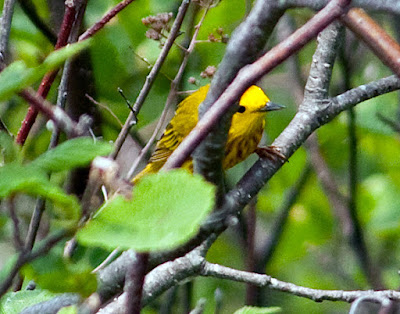
Yellow warbler. Photo by Jeff Titon, 2010.


I begin with a bit of news: FeedSpot has selected Sustainable Music as one of the fifteen best musicology blogs and websites. I appreciate their recognition of this blog, maintained since 2008.

What follows now is a short introduction, for high school and first-year college students, to the topic of music, sound and nature. I wonder if ChatGPT would produce anything similar. I plan to find out. In any case, I wrote this essay in 2019 and have just now imported it into this blog, but I can't seem to overcome the strange formatting triggered by the endnote numbers in the text. So be it, and my sincere apologies for any difficulties in reading. 


EARTH SONG: MUSIC AND THE ENVIRONMENT


         All over the globe, and throughout history, people have recognized deep connections between music, sound, and nature. The 3rd century B.C.E. Chinese Taoist text, the Zuangzi, asks “You may have heard the [musical] notes of Man, but have you not heard those of Earth?”[1] Henry David Thoreau wrote in his journals of the comforting hum of the “earth song,” the music made by frogs, crickets, and other animals.[2] This essay links earth song to human-made sounds and music for social change and a more sustainable future. 


Sounds tell us a lot about the environment. The natural landscape and the built environment surround us with sounds, whether the sounds of thunder, the whoosh of the wind shaking the trees, the ring of the church bell, the bang of the drum, the alarm-call snorts of deer, the hum of the refrigerator or the scream of the police car siren. We wonder why birds sing.[3] What kind of language is bird song? Is it like human language, or are they just signaling--“danger!” or “here I am?” Have you ever tried to talk with a bird, singing back its melody?[4] Living beings communicate by means of sound. If their acoustic channels (“acoustic niche” is the technical term) are blocked, they either fail to get their signals through or they may try another channel. Birds that live near highways sing higher to avoid being blocked by traffic noise.[5]


We call the characteristic sounds of a place its soundscape. Soundscapes consist of anthrophony (sounds made by human beings), biophony (sounds of nonhuman beings), and geophony (sounds of the Earth, such as wind, rain, thunder, earthquakes, and glaciers). You can imagine how important sounds must have been in an earlier America.[6] Who has not heard of the Liberty Bell? The ringing of large bells could be heard over very long distances. People marked the passing of time with bells ringing in clock towers; bells called children to school and churchgoers to church. The chugging of the railroad locomotive, the clicking of the cars on the tracks, and the scream of the railroad whistle became common sounds in the 19th century.[7] As the trains rolled through the countryside, many a farmer out in the fields hoeing corn or chopping cotton wondered what it would be like to travel and start a new life in some distant city. Many a “railroad blues” song expresses those feelings while a harmonica imitates the sound of the train whistle.[8] What might Rachel Carson have meant when she titled her book about pesticide misuse Silent Spring?[9]     


Soundscapes have interested sound collectors ever since it became possible to make recordings. In some countries, such as Japan, sound collecting has been going on for many decades.[10] Moses Asch, founder of Folkways Records, encouraged collectors of biophonic, geophonic, and anthrophonic sounds and released them on LPs beginning in the 1950s. You can still hear those Folkways albums featuring the sounds of frogs and other amphibians, birds, thunderstorms, even rooms filled with typewriters clicking away (typing pools, as they were called back then).[11] Today’s international sound collectors get together on the internet to share their recordings and technical expertise.[12]


Soundscapes inspire composers of music in various ways. 20th-century musique concrète composers sampled and mixed recorded environmental sounds into their musical performances. John Cage’s famous 4’ 33” is a composition in which the musicians do nothing for the four minutes and thirty-three seconds’ duration of the composition. The only “music” the audience hears is the soundscape of the room in which the “performance” occurs. Contemporary sound installations are sited so as to integrate musical compositions with environmental sounds, indoors and out. Environmental sound art not only awakens listeners to the soundscape but also to environmental impacts of noise pollution (as from airplane flyovers in the National Parks) and habitat change. Some composers have taken down bird songs in musical notation, and others have incorporated, imitated, or transformed bird song phrases in their compositions. In Chinese music such as “100 Birds Courting the Phoenix,” for suona (oboe) and ensemble, extended passages are a virtual catalog of bird calls and songs imitated by instruments.[13] But birdsong played an even more important role in traditional Chinese music. According to the ancient book of the Chunqiu, in the 3rd millennium B.C.E. the Yellow Emperor Huangdi sent one of his courtiers, Lin Lun, to the western mountains to invent music.[14] There he gathered hollow bamboo and made twelve pipes of “superior and inferior generation” to match the pitches he heard in the harmonious singing of the fenghuang birds.[15] In other words, Chinese mythology tells us that the Chinese musical scale comes from birdsong. It was also believed that in a new dynasty the Chinese Emperor would order the fixed-pitch instruments to be recalibrated in order to bring them back in tune with the universe. It would be hard to find a stronger connection between music, sound, and the environment.


Nor was the connection between harmony in music and the universe confined to ancient China. You may have heard about the idea of the music of the spheres. The ancient Greek philosopher Pythagoras (c. 570-495 B.C.E.) claimed that that when the mathematical ratios that described the motions of the stars and planets were also made to govern musical intervals, they created harmonious sounds; and that therefore these heavenly bodies must make pleasing music (although their sounds were beyond human hearing). This idea of a harmonious universe also was essential to medieval and Renaissance European music philosophers, and to educators who made the study of music a required part of the quadrivium, an important part of the medieval curriculum. Today music is not so central to education, yet most students listen to music on a daily basis for pleasure and consider it an essential part of their lives.


People deeply concerned about the climate emergency ask what they can do to help mitigate this environmental crisis. One way is to become involved with music that raises environmental consciousness, promotes solidarity and encourages care for the Earth. In addition, emerging fields of study such as ecomusicology combine ecology with music in new and powerful ways that can combine knowledge with environmental activism.[16] Raising environmental consciousness often occurs in the face of habitat loss or environmental dangers. In 1966 Pete Seeger recorded God Bless the Grass, the first album of environmental protest songs. Seeger’s “My Dirty Stream,” about the Hudson River, went on to become a protest rallying cry after his Clearwater sloop took part in the first Earth Day (1970).[17] In “Big Yellow Taxi” (1970) Joni Mitchell sang “They paved paradise and they put up a parking lot,” which immediately became a proverbial expression for the environmental movement’s opposition to the proliferation of shopping malls and industrial parks. And in this century, to take one of hundreds of more recent examples, several musicians have devoted themselves to protecting the US Northwest Coast bioregion, the old-growth forests and salmon grounds on the coasts of Washington and British Columbia. Dana Lyons, Idle No More, and The Raging Grannies are among those musicians whose protest songs target the endangered Salish Sea environment.[18] The Hypoxic Punks sing about environmental problems in their home city of Minneapolis-St. Paul.[19] Wikipedia lists hundreds of “songs about the environment” by well-known and lesser-known musicians.[20] In most communities today it is not hard to find local musician-activists who sing to raise environmental consciousness, promote solidarity, and encourage care for the Earth.


Ecomusicology, as the name implies, involves the study of ecology and music. Ecology is the study of organisms (living beings), their relationships with each other, and their relationships with the environment. Ecomusicology is the study of music, sound, culture, nature and the environment in a time of environmental crisis.[21] Ecomusicology brings together composers, musicians, environmental activists, ecologists, and students of music and sound to increase their understanding of the sonic world and its relations with human and other beings, and the environment.[22] Some scholars are especially interested in applying literary ecocriticism to music--that is, in studying the ways composers have incorporated nature and the environment into their ideas about music and their musical compositions themselves. Other eco-musicologists explore the interface between music, sound and the environment more directly. One of these research areas concerns sustainability of natural materials used to make musical instruments.[23] For hundreds of years the finest violin bows have been made of Pernambuco wood, while the finest guitar bodies were constructed of Brazilian rosewood. But these woods currently are endangered, requiring laws to limit their use, and encouraging luthiers to experiment with alternative construction materials. Moreover, research into methods of stewardship and conservation should result in a continued, if limited, supply of traditional materials, while it may be possible to find favorable conditions to grow them outside of their normal ranges, especially in response to habitat change induced by global warming. Other important areas for eco-musicological research involve visiting with and attempting to understand how various native and indigenous peoples think of the sonic universe and its relation to living in harmony with the environment.[24] Long dismissed as superstition, this traditional indigenous knowledge about the healing powers of sound and music has begun to be valued as a way to think about adapting to conditions brought about by the climate emergency. Related to well-being is the research on noise pollution, done by acoustic ecologists on the effects of noise.[25] Sudden loud noise produces a “fight or flight” response while continued loud noise, as near airports, in factories, near quarries, and so on, causes physical and psychological illness, just as a frequently barking neighbor’s dog can drive people to distraction. Public environmental policy requires noise limiting ordinances and other means of noise abatement (acoustic insulation, etc.).


People may think that music streamed over the internet is more environmentally friendly than previous listening formats such as CDs and cassettes, which not only required fossil fuel energy to manufacture them but also, not being recyclable, pile up in landfills. But it takes an enormous amount of energy to operate the servers that store and stream the music. The amount of carbon dioxide emissions from the manufacture, distribution and sale of CDs, vinyl records, and cassettes in the US in 2000 was 157 million kilograms. In 2016, when the revenue from CD sales was roughly 1/8 what it was in 2000, and when streaming and mp3 downloads were the vastly preferred listening formats, the amount of carbon dioxide emissions from internet servers in the US was 350 million kilograms. In other words, despite the transition from CDs to the internet, the amount of carbon dioxide emissions from music listening has nearly doubled. Of course, as electricity comes increasingly from renewable sources, music’s contribution to global warming may decline. In an effort to reduce their carbon footprint, many musicians and bands have introduced more environmentally friendly practices into their music-making and distribution. On their tours, Dave Matthews Band, Phish, Dead and Company, Drake, Walk the Moon, and others reduce carbon use by employing solar energy, distributing reusable water bottles, providing solar charging stations at concerts, and handing out information about environmental issues, green products and tech, and so on. REVERB, an organization created to reduce bands’ energy footprints, sponsors a Farm-to-Stage program that works with local farmers to provide artists and their crews with locally sourced food.[26] In July, 2019 a group of music industry professionals formed an organization called Music Declares Emergency, calling for “the music industry to acknowledge how its practices impact the environment and to commit to taking urgent action” and to “work toward making our businesses ecologically sustainable and regenerative.”[27]


As concern about the well-being of the planet and all of its inhabitants is growing, music and sound make us aware of the plight of our common inheritance: our seas, our air, our forests, our other habitats. We know that the earth song has the power to awaken our environmental awareness and encourage environmental activism. Sound connects beings in the world. In songs of protest and through experimental compositions, we make audible both the strength and vulnerability of our environment, while sonic connections enable our common kinship with it. 


[1] Translated from one of the inner chapters, 齊物論 or The Adjustment of Controversies. See https://theanarchistlibrary.org/library/zhuang-zhou-zhuangzi#toc3.

[2] For example, his entry for May 20, 1854: “The steadily increasing sound of toads and frogs along the river with each successive warmer night is one of the most important peculiarities of the season. Their prevalence and loudness is in proportion to the increased temperature of the day. It is the first earth-song, beginning with the croakers, (the crickets not yet), as if the very meads at last burst into a meadowy song.” See also the entries for Nov. 11, 1850, May 12, 1857, and January 2, 1858. Thoreau’s journals may be found at https://www.walden.org/collection/journals/.

[3] See Donald Kroodsma, The Singing Life of Birds (Houghton Mifflin Harcourt, 2007).

[4] See Alan Powers, Bird Talk (Berkeley, CA: Frog Books, 2003).

[5] See Bernie Krause, Wild Soundscapes, revised 2nd ed. (Yale University Press, 2016), and The Great Animal Orchestra (Little, Brown Back Bay Books, 2013).

[6] Richard Rath, How Early America Sounded (Cornell University Press, 2005).

[7] In the “Sounds” chapter of Walden, Henry David Thoreau wrote about the sounds of the locomotive piercing the natural soundscape in the forest near Walden Pond. For Thoreau these sounds were signals of the Industrial Revolution.

[8] Hear Woody Guthrie and Sonny Terry’s “Railroad Blues” on Folkways FW00AA4_205, The Asch Recordings, 1939 to 1945 - Vol. 2.

[9] Rachel Carson, Silent Spring, fiftieth anniversary edition (Houghton Mifflin, 2002).

[10] For example, the Nature Sounds Society of Japan at http://naturesoundsjp.blogspot.com/.

[11] See Jeff Todd Titon, “A Sound Commons for All Living Creatures.” Smithsonian Folkways Magazine (Fall-Winter 2012). https://folkways.si.edu/magazine-fall-winter-2012-sound-commons-living-creatures/science-and-nature-world/music/article/smithsonian.

[12] For example, the World Listening Project (https://www.worldlisteningproject.org/), and Xeno-canto (for bird songs, https://www.xeno-canto.org/) Accessed 27 November 2019. Nature Recordists (http://www.naturesongs.com/naturerecordists.html) and the World Listening Project also formed Yahoo Groups but as of this writing Yahoo Groups is closing and both those communities are migrating to Groups.io.

[13] A performance by Yazhi Guo and Tao He playing the suona and erhu may be seen at https://www.youtube.com/watch?v=l3wFEIMads0.

[14] Written by Lü Buweh in the 3th century B.C.E. The music-making events themselves were said to have occurred in the 3rd millennium B.C.E.

[15] These were mythological, immortal creatures, sometimes called the Chinese phoenix, representing both male and female elements (a yin-yang harmony).

[16] See https://ecomusicology.info/. Accessed 27 November 2019.

[17] God Bless the Grass, containing “My Dirty Stream,” Columbia Records CL 2432, reissued in 1982 as Folkways FW27232 and FSS 37232. The album also contained many songs composed by Malvina Reynolds, author of “Little Boxes,” a celebrated song about look-alike housing in suburban developments that mocked middle-class conformity in 1950s America.

[18] Mark Pedelty, A Song to Save the Salish Sea (Bloomington: Indiana University Press, 2016).

[19] See and hear them sing “Watershed” at https://www.youtube.com/watch?v=pfJFCBNkqOs.

[21] Jeff Todd Titon, “The Nature of Ecomusicology,” Mùsica e Cultura, Vol. 18, no. 1, p. 9. Download the article in English at http://www.abet.mus.br/revista/.

[22] For more information about ecomusicology see Aaron Allen and Kevin Dawe, eds., Current Directions in Ecomusicology (Routledge, 2016) and the journal Ecomusicology Review (at https://ecomusicology.info/.

[23] Aaron Allen, “Fatto Di Fiemme’: Stradivari’s Violins and the Musical Trees of the Paneveggio,” in Invaluable Trees: Cultures of Nature, 1660-1830, edited by Laura Auricchio, Elizabeth Heckendorn Cook, and Giulia Pacini, pp. 301-315 (Oxford: Voltaire Foundation, 2012).

[24] See, for example, Klisala Harrison, “Aboriginal Music for Well-being in a Canadian Inner City,” MUSICultures, 36 (2009), pp. 1-22. During the intensifying environmental crisis of the past fifty years, Euro-American scholars have increasingly turned to native and indigenous knowledges about the environment for ways for humans to live in harmony with nature. There is a large and continually growing literature in this area from anthropologists such as Philippe Descola, whose In the Society of Nature: a Native Ecology in Amazonia (Cambridge: Cambridge University Press, 1994) was one of the key texts in the last century. Descola’s Beyond Nature and Culture (Chicago: University of Chicago Press, 2013) is recognized as a landmark in 21st century environmental studies.

[25] R. Murray Schafer, the pioneer in acoustic ecology who coined the term “soundscape,” has been especially concerned about noise pollution (e.g., in his The Soundscape (New York: Destiny Books, 1993). His thoughts on the subject may be found summarized in a lecture, “The Sounding City,” at https://www.david-howes.com/senses/sensing-the-city-lecture-RMurraySchafer.htm.

[26] Information about REVERB can be found at https://reverb.org.

[27] Information about Music Declares Emergency can be found at https://www.musicdeclares.net/.