Sustainable Music

Translate

Showing posts with label indigenous ecological knowledges. Show all posts

Wednesday, December 28, 2022

Keeping Track of Writing Projects -- End of 2022

Scholar with his books. Gerbrand van den Eeckhout (17th c.)


An update to keep track of my writing projects has become an annual event. Since the last update, on Dec. 31, 2021, which writing projects have progressed, which have been published, and which have seemingly stagnated? On my academia.edu page and also in my twitter profile @jefftoddtiton I suggest that readers who want to know the answer to the question “What research and writing are you working on?” come to this blog to find out. Here is the list:

1. “Ethical Considerations for Ethnomusicologists in the Midst of Environmental Crisis.” In August, 2020 I’d finished this essay for a book in progress edited by Jonathan Stock and Beverley Diamond called the Routledge Companion to Ethics and Research in Ethnomusicology. Routledge published the book a few months ago, and it's available from Routledge and other sources. I'm hoping that in a year it will be available in paperback at reasonable price.

2. A short essay on musical icons, introducing a section of a book entitled Social Voices: The Cultural Politics of Singers Around the Globe.  I finished up the essay in the spring of 2021. The book is in production now and scheduled for publication by the University of Illinois Press in 2023.

3. “Eco-trope or Eco-tripe? Music Ecology Today.” I completed this chapter in 2021. It’s for the book edited by Aaron S. Allen and myself, Sounds, Ecologies, Musics. I also co-wrote the Introduction with Aaron. The book contains thirteen essays written from diverse ecological perspectives, by scientists, scholars, environmental activists, and musicians, each concerned with music, sound, nature, culture and the environment in a time of environmental crisis. Since I wrote about it in my blog entry a year ago, it received a positive external review from Oxford's referees and has just been put into production at Oxford, with expected publication toward the end of 2023.

4. “The Sound Commons and Applied Ecomusicologies.” This is an article co-authored by Aaron Allen, Taylor Leapaldt, Mark Pedelty, and myself, for The Routledge Companion to Applied Musicology, edited by Chris Dromey. I completed my section (on my concept of the sound commons) of the article in 2019, and the others followed with their sections; we revised in 2020 and sent the manuscript to Chris, who returned it with suggested revisions in the spring of 2021. We responded to those and revised yet again, and sent them back to Chris. The book is in the latter stages of production and should be available in the spring of 2023. I'm hoping that a year later it will be available in paperback at reasonable price.

5. “Ecojustice and Ontological Turns: a Response to Marshall and DeAngeli.” This was part of an E-seminar that the Ecomusicology Review has been conducting in the fall of 2021 within the ecomusicology Google Group. Kimberly Marshall and Emma DeAngeli wrote an essay to which Sebastian Hochmeyer responded, whereupon they wrote a rejoinder. Mark Pedelty followed with a second response. Aaron Allen asked me if I too would respond, and so I wrote a brief response, starting with my reaction to a disagreement between Marshall and DeAngeli on one hand, and Hachmeyer on the other, over the relevance of the so-called ontological turn in anthropology to the project of social justice. Rather than take sides, I proposed that ecojustice would resolve the disagreement by including social justice in the larger framework of relationality and by extending reciprocity and respect to all living beings, not just humans. This is congruent with the writings of Indigenous scholars such as Robin Kimmerer and Zoe Todd in past dozen years or so as well even though they don’t use that term. Aaron intends for all these to be published in the Ecomusicology Review, though I’m still not sure when.

6.  An essay on music and sustainability that I wrote as an invited forward for the book Music, Communities, Sustainability, edited by Huib Schippers and Anthony Seeger, was published this year by Oxford University Press. 

7. My essay "Sustainability and a Sound Ecology," the latest published description of my sound ecology project, was kindly translated into Spanish by Chilean musicologist Mauricio Valdebenito, and published in El oído pensante, vol. 10, no. 1, 2022, pp. 131-156. It can be downloaded from the journal's website, here. The English version had already been published in my book Toward a Sound Ecology: New and Selected Essays (Indiana University Press, 2020). 

8. Earlier this year Robert Baron, on behalf of the Fellows of the American Folklore Society, invited me to contribute an essay to a forthcoming issue of the Journal of American Folklore, to be derived from my oral presentation on folklife, heritage and environment for the American Folklore Society webinar on "Heritage, Folklore, and the Public Sphere" on March 10, 2021. I completed the essay (a little more than 10,000 words) in August, and then revised it a little in response to suggestions from Robert and also from Mary Hufford and returned it to Robert Baron at the end of October. Its title is "Folklife, Heritage, and the Environment: A Critique of Natural Capital, Ecosystem Services, and Settler Ecology." It's to go into a future issue of the Journal with a group of other essays related to the topic of heritage, folklore, and the public sphere. I have no timeline yet on publication.

9. I continue to work on my book-length manuscript, A Sound Ecology.

Among the lectures and seminars I gave during this past year, one in particular was memorable: an invited video lecture for the Festival El Aleph, in Mexico City. The festival was organized by CulturaUnam with the National Autonomous University of Mexico, and broadcast on TV UNAM. I was one of three scholars from the US invited to present at this festival, a hybrid (partly online, partly in-person) extravaganza that unites science with art and music by means of lectures, workshops, and performances by scientists, scholars, artists and musicians. The theme this year was sustainability and environment, and I was asked to speak about my sound ecology project. The Festival recorded the lecture over Zoom in March, and then broadcast it during the festival itself, on May 25. I was pleasantly surprised to find, when I began watching the broadcast itself, that Festival producers had located video footage and inserted it, intercutting with my "talking head" so as to illustrate the ideas that I was discussing. The result was that instead of seeing a talking head on the screen for 45 minutes, the viewer saw the lecture intercut with a variety of illustrative video clips that made the presentation more interesting to watch and listen to. I'm grateful to the producers for doing this. I was, also, told by several friends and colleagues who saw it, that it was the clearest and best explanation of my sound ecology project to date. As it happens, it can still be seen from the Festival website, via this link in case anyone reading this blog entry would like to take a look.

Saturday, April 30, 2022

Settler Ecology and Natural Rights

Whanganui River. Courtesy of Wikimedia Commons.
 

      This blog entry follows on from my July 31, 2021 blog entry on Environmental Sustainability, Personhood, Legal Rights, and Indigenous Ecological Knowledges. Here I frame the matters under consideration in terms of settler ecology and add some new ideas and information. Elsewhere I’ve written that because natural rights doctrine (the human right to life and liberty) derives from nature, then self-evidently nature possesses these same rights. The counter argument is that human beings are exceptional in having consciousness, agency, language, etc. But this human exceptionalism is under challenge from neurobiologists, behavioral ecologists, and philosophers, not to mention animal rights activists and scientists who study plant intelligence and communication. Take, for instance, the 2012 Cambridge (University) Declaration on Consciousness, in which several prominent scientists declared that “Convergent evidence indicates that non-human animals have the neuroanatomical, neurochemical, and neurophysiological substrates of conscious states along with the capacity to exhibit intentional behaviors. Consequently, the weight of evidence indicates that humans are not unique in possessing the neurological substrates that generate consciousness.”
    If, then, more than human living creatures have consciousness, agency, language (gestural as well as sonic), and so on, it would appear that Western ways of thinking must grant them at least a moral right to life and liberty. Do other living beings—not only human beings—similarly have a legal right? What are the advantages and disadvantages to positioning animals (and possibly plants, and indeed entire ecoystems) within the modern, Euro-American legal framework of rights and obligations (duties) that largely derive from the social contract and justice theories that began during the Enlightenment? What is the relationship between such a rights regime for the environment and settler ecology? What possibly more desirable alternatives are available?
    At least since Christopher Stone’s provocative book Should Trees Have Standing (originally published in 1972)--that is, legal standing--nature’s natural rights have been invoked in the US to protect environmental features such as endangered species, landforms, and ecosystems against encroachment from developers. That is an application of ecojustice, and it is represented by a dissenting strain, neither colonialist nor extractivist, within US settler ecological thought: one that runs through Henry David Thoreau and Aldo Leopold to contemporary conservation biologists and environmental activists. Town governments in Pennsylvania, for example, have passed ordinances granting legal rights to certain landforms in order to prevent fracking. They argued that if US law grants legal rights based on “personhood” to corporations, which corporate “persons” may have some kind of collective agency and intentionality, but lack consciousness, then landforms and ecosystems may also be considered persons and be granted similar rights. The latest example of such a lawsuit is occurring in Florida, where plaintiffs have gone to court on behalf of a threatened ecosystem, Lake Mary Jane, in an effort to stop work on a nearby housing development. Needless to say, the fracking corporations quickly sued the Pennsylvania town governments, and the judges in the state courts ruled in their favor. Whether the same fate awaits Lake Mary Jane remains to be seen.
    Rights regime suits have been effective in some instances outside the US, however. Ecuador and New Zealand are cases in point, where ecosystems such as the Whanganui River, and mountains have been granted the right to be respected and largely left alone. In those cases, the claims have been made not exclusively within a Euro-American legal framework of rights and personhood, but rather also by giving weight to Indigenous people’s beliefs concerning the rights and sentience of non-human natural beings, which requires thinking of them not as objects (as Western science does) but as subjects—that is, as living beings with their own forms of subjectivity, agency, consciousness, etc. In Ecuador, rights of nature are enshrined in its Constitution. That is not settler ecology. 

Saturday, July 31, 2021

Environmental Sustainability, Personhood, Legal Rights, and Indigenous Ecological Knowledges

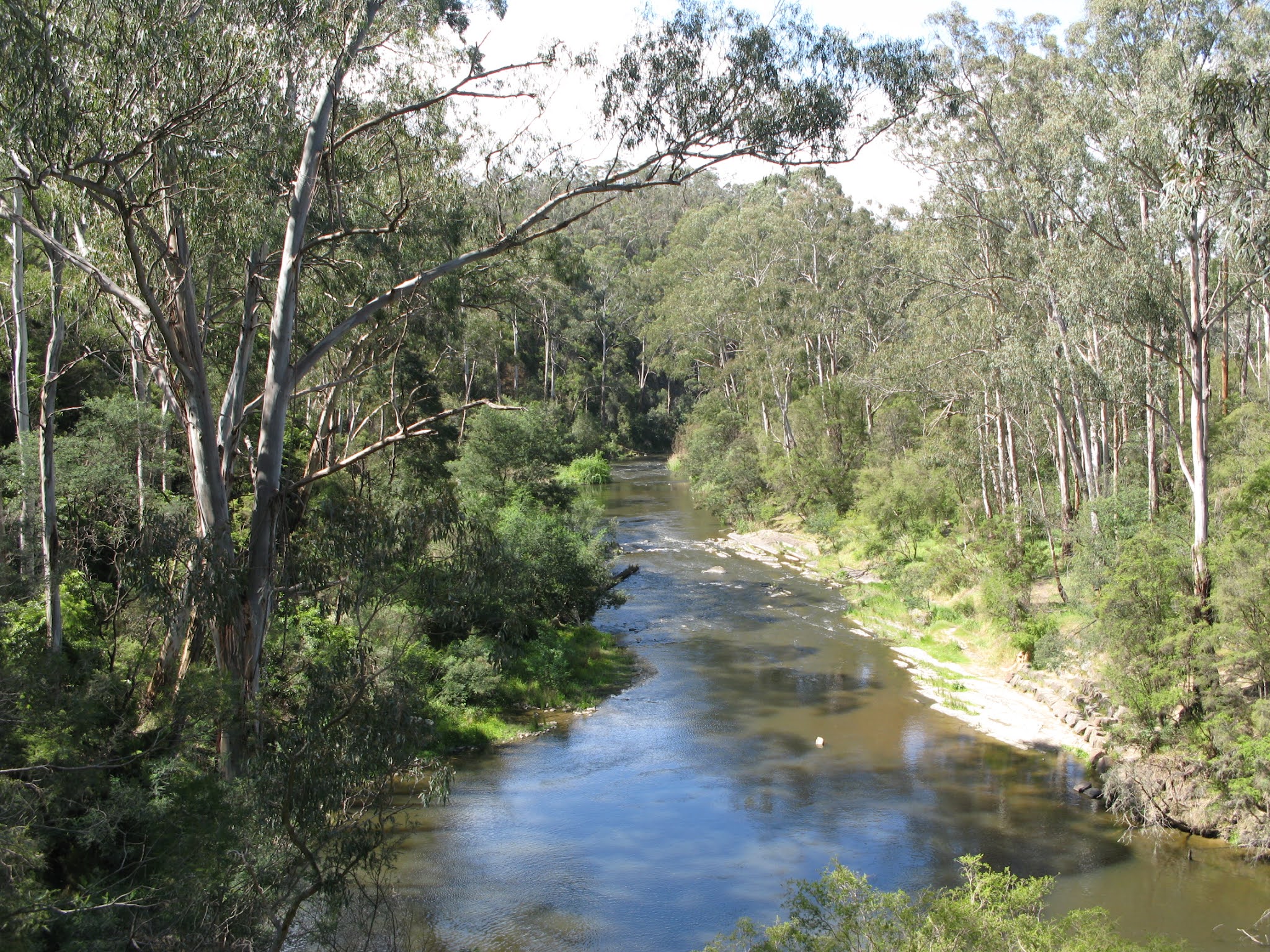
Upper Yarra River, Australia. Courtesy Wikimedia Commons.


      In the Yoder Lecture, which I delivered on October 15, 2017 to the American Folklore Society as "Ecojustice, Folklife and a Sound Ecology," I said that “In extending the idea of ecojustice to the Earth and all its beings, the ecojustice movement would in my view do well to consider these beings—including plants, nonhuman animals, landforms, and so forth—as persons, with the justice and rights that persons deserve. Needless to say, this is not how we in the modern, Euro-American world usually think of justice. We extend only limited rights to beings outside the human world, as for example in our laws against excessive cruelty to the higher animals.” After the lecture, one of the two discussants pointed out that there was, also, a downside in considering these beings persons; namely, that in bringing them into the legal system it would also risk subjecting them to adverse judgments, to obligations that accompany rights, and to other encumbrances of the law, which seemed unwise. I’d spoken about traditional and Indigenous ecological knowledges of nature in that lecture, but did not have the time to speak a rejoinder and say that for many Indigenous peoples, nonhuman beings are like persons, in some ways are kin, and do have standing. In the meantime, I’ve thought more about this issue, but only recently learned that it has been pursued in the courts and legislature in Australia, in response to Aboriginal peoples’ activism. Indeed, it was in 2017 that the Yarra River Protection Act was passed in Parliament, which recognizes the river as a living entity. The Yarra River runs some 150 miles through the Yarra Valley and into Melbourne before flowing into Hobson’s Bay. For the Australian settlers, this recognition fits within the scientific portrait of the river as an integrated ecosystem. But for the aboriginal Wurundjeri the river means something more than that, which also is carried in the concept of personhood: the river with its fish, and its birds, and its land corridor, is a relative, their kin, a sacred, life-giving ancestor. Personhood, in this sense, carries with it a good deal more than mere legal standing and the right to protection.  

Saturday, March 27, 2021

Salon April 9: Folk Knowledge, Environment and Sustainability

 On April 9 at 11 a.m. US eastern daylight time, Mary Hufford, Katey Borland and I will co-host an internet "salon" on folk knowledge, environment and sustainability. The salon, sponsored by the American Folklore Society Fellows, is open to those who attended the March 10 Webinar on Heritage, Folklore, and the Public Sphere:

To participate in the April 9 salon, one must pre-register here. Our  salon is a follow-up to my presentation on that topic for the AFS last March 10, which may be viewed here, beginning at 1 hour, six minutes, and thirty seconds in: Mary Hufford introduces me and I speak for ten minutes on this topic. If you prefer a transcript, in my previous blog entry I printed a draft which was identical to what I presented in the Webinar. I feel fortunate to have two outstanding salon co-hosts in Mary and Katey, each bringing their perspectives on the topic to the salon. Nonetheless, the idea for the salon is for us to host a discussion, not to present our ideas only. Several hundred people attended the Webinar; we look forward to hosting many of you on April 9 at 11 a.m. e.d.t. for a stimulating discussion. We want to hear what you think.

Environmental sustainability has been around in one form or another for more than a century but it has taken on a new urgency in our era of climate change. Cultural sustainability is a comparatively new topic. I began speaking about it to the American Folklore Society in 2006, drawing on sustainability discourses in ecology and also in economics (i.e., sustainable development). Modernization and development have taken a toll on the environment. Is sustainable development the answer? The United Nations thinks so. Or is sustainable development, like sustainable growth, an oxymoron? What is the place of culture, especially traditional expressive culture, such as folk and Indigenous knowledges, in public policy that emphasizes sustainable economic development?  Here is the description of the salon:

This salon will consider how public folklore and heritage programs can foster the sustainability of the natural environment and development of society as a whole.  How do cultural and environmental sustainability differ?  What difference does that make for folklore research and practice?  Querying assumptions bundled into sustainability frameworks, we will explore emerging models for culturally-driven sustainability. How do these models bear on the achievement of the UN’s Sustainable Development Goals? What opportunities does the U.N.’s IPBES program represent for public folklore?  What are the most productive questions that folklorists are exploring with communities to arrive at models for sustainable development?  


Saturday, October 31, 2020

Keeping Track of Writing Projects

Scholar sharpening his quill, by Gerrit Dou (Dutch, 17th c.)


    Although I don't have a quill pen, as does the scholar in this painting courtesy of the Wikimedia Commons, I thought I’d offer readers glimpse into some of my scholarly writing projects going along during the second half of this calendar year, and where they stand. Compared to this blog which is aimed at the public, these projects may appear esoteric and begging for translation. That would be a useful future task for this blog. Yet this blog originally was intended as a research blog, a basket of ideas mainly for my own use. But the writerly voice that emerged wanted to write for the public, not mainly for myself. This entry will be a change of pace, then, because it's going to be much more like that basket.

    I want to say also that besides writing projects, like most people in the United States today I’ve been much absorbed this year with activities surrounding the upcoming elections, local, state, and national, to take place in only a few days, although the results may not be known as quickly this year as usual. But this isn’t a blog about elections and politics.

    It seems no week goes by without something needing to be done on an article, a chapter, or a review in progress. I couldn’t possibly have involved myself in these writing projects while I was a professor, because during the academic year I spent almost all my work time in teaching, advising, and administrative work. Now in retirement I have no teaching or advising obligations—at least, no formal ones—and the only administrative work I’ve been doing has been for the academic societies to which I belong. Before I retired, I was able to work on writing projects only during summers (when I had no teaching obligations) and semesters or years on leave with fellowships or grants, often combining those with sabbaticals. Now in retirement I have much more time to read freely, and to write when I wish to. Here, then, is a brief description of some in-progress writing projects.

    1. “Ethical Considerations for Ethnomusicologists in the Midst of Environmental Crisis.” This is my chapter in a book in progress edited by Jonathan Stock and Beverley Diamond called the Routledge Companion to Ethics in Ethnomusicology.  The initial draft of my chapter was due on August 31. I just barely sent it in by the deadline. The abstract: "Ethnomusicologists’ “primary ethical responsibility is to their research participants,” according to the 2018 SEM Statement on Ethical Considerations. The Statement asserts further that in some cases this responsibility must be extended to “natural flora, and fauna, and human relationships to these.” What happens when these two principles are in conflict? I re-examine, from an ethical standpoint, a longitudinal research study among a musical community of coal miners whose industry harms the environment and themselves, rendering them vulnerable to both economic and environmental injustice. Resolution of this ethical conflict is rendered especially difficult because this community has a justifiable and longstanding distrust of outside do-gooders such as union organizers, social workers and environmentalists."

    1a. On October 23 I gave a brief and partial version of this chapter at a roundtable on “complicating the conversation about ethics in ethnomusicology” at the recent Society for Ethnomusicology conference.

    2. “Ethnography in the Study of Congregational Music.” This is a chapter on doing ethnographic fieldwork, with special attention to prospects and problems with ethnography in religious music-cultures. In this chapter I attempt to answer three questions: (1) What is ethnography? (2) What theories and methods offer a foundation for ethnographic research, and does religion present special difficulties? and (3) Why incorporate ethnography into studies of congregational music? The chapter is for a book long in progress that’s edited by Jeffers Engelhardt, Monique Ingalls, and Andrew Mall. It’s entitled Studying Congregational Music, also under contract with Routledge. This book has been in progress since 2015. Jeffers Engelhardt asked me if I’d write a chapter on ethnography for this volume in 2015; I accepted the invitation and submitted the chapter in May, 2016. More than four years went by as the rest of the authors wrote their chapters and the editors wrote their introductory material. Last month the manuscript underwent Routledge’s copyediting. My copyedited chapter was sent to me about two weeks ago, and I was given 7 days to go over the copyedits, answer questions, and make corrections. I managed to squeeze it in while also attending and presenting at the SEM conference, again just returning it before the deadline. Possibly I will see page proofs and have a chance to correct these as well, but it’s just as likely that the editors will take care of that. Most likely the book will be published in 2021, five years after I completed my chapter for it. That is a long time, but it’s not uncommon in an edited volume with a dozen or more contributing authors.

    3. “A Sound Economy.” This article is an expansion of one of the four topics of my “sound ecology” project. It is a chapter in a book in progress entitled Transforming Ethnomusicology, edited by Beverley Diamond and Salwa El-Shawan Castelo-Branco, under contract with Oxford University Press. I wrote my chapter in 2017, basing it partly on my plenary address for the 2015 “Transforming Ethnomusicology” forum in Limerick, Ireland; and on one of my four public Basler Lectures at East Tennessee State University in March and April, 2016. A sound economy is characteristic of a sound community and arises from the recognition of co-presence and a universal kinship by means of sound experience. These ideas are much elaborated in my sound ecology project, the latest summary of it having appeared in the last chapter of my book Toward a Sound Ecology, published last August by Indiana University Press. Last month the manuscript for Transforming Ethnomusicology underwent Oxford’s copyediting. My copyedited chapter was sent to me about two weeks ago, and I was given three weeks to go over the copyedits, answer questions, and update the citations and references, and make other corrections. I spent a couple of days last week doing this in down time from the SEM conference, and have been working steadily on it this weekend as well. I hope to complete it and send it back to the editors in a few more days. Possibly I will see page proofs and have a chance to correct these as well, but it’s just as likely that the editors will take care of that. Most likely the book will be published in 2021, four years after I completed my chapter for it.

    4. “An Ecological Approach to Folklife Studies, Expressive Culture, and Environment.” This article, like the first three, came as the result of an invitation—in this case from a group based at Indiana University that go by the acronymn DERT, which stands for Diverse Environmental Research Team. DERT consists of folklorists, ethnomusicologists, and ecomusicologists. The article will be published in a book under contract to the University of Illinois Press, entitled Diverse Environmentalisms: Expressive Culture and Environmental Change, edited by John McDowell, Katherine Borland, Rebecca Dirksen, and Sue Touhy. In this article I attempted once more to advance an ecological approach to folklife and the performance of expressive culture, returning to a topic that I first broached in my 1988 book, Powerhouse for God: Speech, Chant, and Song in an Appalachian Baptist Church. The abstract: "The performed word, whether spoken, chanted, or sung, offers more than an expression of culture in aesthetic form. From an ecological point of view, it articulates changing historical and contemporary relations among living beings and their environments. Theories from ecosystems ecology, when applied to sociocultural systems as well as biological ones, reveal that the performed word adjusts connections among people, material culture, animals, plants, landforms, and other aspects of the physical environment. Sacred language in particular is imbued with the power to alter relations and, therefore, to change beings, the environment, and the course of future events." The article goes on to illustrate these claims through a case study of environmental affordances, catastrophes, and life story narratives in a community in Virginia’s northern Blue Ridge Mountains, over a time depth of approximately 150 years. The DERT team editor that I worked with was more interested in the performed word than in ecology. In 2018 expanded the my 2017 draft of this chapter by adding a few pages about expressive culture, while I insisted on maintaining what I had written about farming, family, husbandry, and the effects of a changing physical environment, encouraging various adaptations and requiring others. I reviewed the copyedited manuscript two years later (i.e., in late July and early August), sending it back to the editors then. I hope to see page proofs either later this year or early next. We expect that the book will be published in 2021.

    5. “Earth Song: Music and the Environment.” Like the first four, this essay was written on invitation. In 2019 I was approached by Huib Schippers, then director of Folkways Records, about writing a short article for Alexander Street Press for a curriculum accompanying various albums featuring music and environment, in the Folkways Records catalog. It was to be a brief essay, no more than 3000 words (the first four averaged 8,000 words). I said I would do so, as long as I could write about the deep connections between music, sound, and nature. After they agreed, I wrote the essay and completed it shortly after Thanksgiving, 2019, and returned it then. In 2020 I’ve been corresponding all the while with Huib and some others who were hired for the project, advising them as they prepare a list of further readings to go with this essay and the curricular unit that it’s a part of. I’m not sure when it will be published; perhaps next year, perhaps later.

    6. A “response” chapter based on my presentation for an online conference at Dartmouth College, entitled “The Power of Song: The Cultural Politics of Singers Around the Globe,” to take place in early December. This, also, came about as a result of an invitation. I’m to respond to three presentations on “musical icons,” that is, people who make music and who have become performers who are more than just famous; they have become cultural symbols, they and their careers embodying beliefs deeply embedded in their societies. So far two of the three papers have arrived, but only one arrived by the deadline. As a result I’ve blocked out my response to that paper and will need to incorporate my response to the second paper shortly while I await the third. After the conference they will revise their conference papers and turn them into articles, and I will revise my conference response for publication in the book.

    7. “Eco-trope or Eco-tripe? Music Ecology as a Complex System.” This is an article in progress for a book edited by Aaron Allen and myself, called Sounds, Ecologies, Musics, under contract with Oxford University Press. The article is an expansion of part of my invited keynote address to the Irish ICTM conference in 2017, and part of the abstract goes like this: “Complex ecosystems analyses, environmental philosophy and ecological knowledges (from both Western science and indigenous populations) of sonic behavior, in both human animals and other-than-human animals, are complementary in ways that hold out the promise of re-centering sound connections and kinships. In this way, music/ecology becomes more than merely a metaphor. Employing ecological principles to understand sonic behavior among organisms and their environment, the music/ecology metaphor offers a path toward sound communities, sound economies, and a sound ecology.” My progress on this article has been gradual as I’ve been attending to the five that I listed above. I’m going to try hard to keep my desk mostly clear for the next couple of months so that I can finish up a draft.


Thursday, August 1, 2019

Animal sound communication, human language, and perspectivism

          I return to the question of animal sound communication, which I wrote about in January of this year. Animals—humans included—communicate with one another in song, speech, and various in-between modes such as chant. Animals also communicate by manipulating objects to make sounds, whether beavers slapping the water with their tails or humans playing musical instruments. Because animal communication is necessary for survival, it is necessary for sustainability of life as we know it on planet Earth. Sound, of course, is one of the principal ways in which animals communicate with one another.
         Among the questions that interest scientists about nonhuman animal sound communication are, first of all, whether species’ communication in sound is purely functional, or whether it has an aesthetic component. Do animals always make sounds for a practical purpose, in other words, or might they do it for pleasure, as humans do? Might some of their practical sounds, such as birdsong, offer pleasure as well as having functions such as locating oneself to one’s mate? A second question is whether animal sounds constitute language. That is, do they exhibit the structural and functional characteristics of what we know as language, even if in some simple stage? Or are their sounds merely signals? Songbirds, humpback whales, chimpanzees, elephants and dolphins seem to be good test cases for language. All of them communicate with a variety of complex sounds; in terms of their structure, could they constitute a language? Scientists do not agree on the answer. Generally speaking, the evolutionary biologists who study animal behavior and sound communication favor the idea that nonhuman animal sounds, no matter how complex they are in structure, constitute signals, stimuli that result in automatic responses in the listening animal. At the same time, many scientists are conducting experiments to see if that is really true, or if the complex sounds of some species could be said to constitute anything resembling a language, and whether there is any evidence suggesting that it also has an aesthetic component.
         Recently I came upon an educational website that pursued differences between human and animal communication. The linked to a lecture by a professor at the Leiden University Center for Linguistics, and then examined the supposed differences between human and nonhuman animal communication. As I read through these differences, I realized that some of the evidence from birdsong and humpback whale song casts doubt on those claims for difference, or at least for a sharp dividing line between human and nonhuman.
Black-capped chickadee. Photo by Ryan Hodnett
         For example, humans are said to be able to string sounds together in an infinite number of ways to create meaning via words and sentences, and animals are said not to communicate by arranging sounds in this way. And yet there is scientific evidence that chickadees string together phonemes in a simple manner to indicate, for example, not only that there is a danger from a nearby predator, but also how great is that danger. Humpback whales, also, have been observed to string together sounds in different ways to indicate different meanings. Part of the difficulty here, it would seem, is that humans do not understand animal language. For another example, humans are said to be able to invent new words easily, whereas animals must evolve in order for their signals to change. But the invention of new words and their addition to human language proceeds slowly, whereas animals change their signs before they evolve, and then evolution selects those whose signs are most suitable for survival. A few songbirds, for example, who are permanent residents near highways change the pitch range of their songs to avoid traffic noise, and only then does natural selection favor those birds that have changed their songs, resulting in a higher percentage of birds that have adapted and that can, presumably, survive better. Experiments have shown that this evolution is rapid.
         A couple of other differences turn out to have exceptions, also. It is said that humans acquire language culturally, by learning, whereas animal communication is inborn and cannot be learned. But that isn’t so. Songbirds raised by foster parents of another species learn to sing their foster parents’ songs. Another difference discussed on the website is arbitrariness: human language is symbolic and filled with ideas, whereas animal communication is said not to be symbolic. The jury is still out on that one, but one wonders how we would be able to recognize whether animal communication was symbolic when we don’t understand their sounds in the same way they do. In other words, what we conclude by observation to be no more than stimulus and response may in fact be arbitrary to some extent on account of its complexity, or on account of factors that we ordinarily wouldn’t take into consideration, such as the time of day or night of the utterance, its tempo, how frequently it is repeated, and so on.
         For centuries scientists have claimed that only human beings have language, but it no longer certain that this is true. Instead, it’s possible that language is something best understood to exist on a continuum of development, with humans having a more fully developed language while some other animals exhibit it at an earlier stage of development. If animals exist on an evolutionary continuum, it makes some sense to think of language in this way. Obviously, humans have had the capacity to develop language into a very sophisticated communications tool, and beyond that into an artistic expression with aesthetic qualities. At the same time, we should not be too hasty in assuming that animals communicate only by means of signals that act as stimuli to effect responses. After all, scientists do not know what it is like to communicate as a whale or a dolphin or an elephant.
         On the other hand, many Amerindian indigenous peoples’ ecological knowledges take a very different approach to animals and animal sound communication: perspectivism and multinaturalism. I’ve written about this to some extent in a completed chapter for an as-yet-unpublished book edited by Harris Berger, one that has been in the making for a decade or so: the "Oxford Handbook of Phenomenological Ethnomusicology." In it, I discuss evidence for expressive culture among animals. From a perspectivist viewpoint, animals have intentionality, consciousness, reflective thought, experience, aesthetics, language, and expressive culture because what it is like to communicate as a whale or dolphin or elephant from the animal’s point of view is exactly the same as what it is like to communicate as a human because animals think of themselves as humans.